
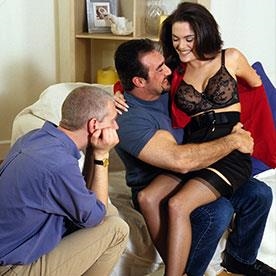
In short: a cuckold is a man whose partner is intimate with someone else. For centuries the word was an insult aimed at a husband deceived by his wife. Today it more often describes something a couple choose together: a consensual dynamic in which one partner enjoys, watches, hears about or encourages the other partner's encounters with a third person. Cuckolding is the practice of that dynamic, and a cuckold couple is a pair who share it.
Where the word comes from
The word goes back to medieval English. Writers used forms such as "cokewold" from around the thirteenth century, borrowed from an Old French word built on "cucu", the cuckoo. The link is the bird's habit of laying its eggs in other birds' nests, leaving another to raise its young. A husband whose wife had a lover, and who might end up raising another man's child, was compared to the bird whose nest had been used.
By Shakespeare's time the cuckold was a stock figure of fun, often shown wearing invisible horns. Plays and ballads joked about horns sprouting on a husband's head, and the gesture of horns made with the fingers became a way to mock him. The female version, "cuckquean", appeared in the sixteenth century to describe a wife whose husband was unfaithful.
For most of history, then, the word meant humiliation without consent. Nobody chose to be a cuckold.
What cuckolding means now
The modern meaning is very different. In today's usage, cuckolding usually means a fantasy or arrangement that both partners want. The husband is not deceived; he knows, he agrees, and very often the idea excites him more than anyone. The wife is not cheating; she is acting with her partner's blessing and frequently at his encouragement.
The core of the modern dynamic is a particular emotional mix. As a cuckold, you might feel a combination of arousal, pride, vulnerability and closeness. Seeing or imagining a partner desired by someone else can make her seem more desirable. Giving permission can feel generous and intimate. For some, a measure of jealousy is part of the thrill, held safely within trust. For others the appeal lies in submission, or in watching a partner enjoy herself without inhibition.
There is a word used in the wider lifestyle world for feeling joy at a partner's pleasure with someone else: compersion. Not every cuckold uses it, but many recognize the feeling.
The people involved
A cuckold dynamic usually involves three roles.
The cuckold. Traditionally the husband or male partner who watches, listens, waits or encourages. He may be present, absent, involved or simply aware.
The partner. Usually the wife or girlfriend, who enjoys time with another person while her partner shares in the experience in whatever way the couple agree.
The third. The other man or woman. In cuckold circles a male third is often called a bull, a nickname for a confident man who is welcomed into a couple's dynamic. A third should be a respectful guest, not a rival.
Common forms of cuckolding
There is no single script. Couples mix and match:
- Watching. The cuckold is in the room, sometimes just observing.
- Hearing about it. He stays away and his partner tells him everything afterwards.
- Fantasy and roleplay. Nobody else is ever involved; the couple use stories and imagination in their own bedroom.
- Female led cuckolding. The partner takes charge, chooses the third and sets the rules.
- Bi cuckolding. The male partner is also attracted to the third man and may take part.
- Humiliation play. Teasing or verbal play the couple have agreed on in advance, never imposed.
- Chastity and denial. A couple can add orgasm denial or chastity to heighten the cuckold's anticipation.
- Long distance cuckolding. The partner meets someone while away on a trip, and the story travels home by message or in person.
- Cuckqueaning. The reverse dynamic, where a wife enjoys her husband's time with another woman. Read more in what is a cuckquean.
How cuckolding differs from related ideas
Cheating. Infidelity involves deception; cuckolding involves agreement. That difference is everything.
Swinging. Swingers typically swap with another couple so that both partners play. In cuckolding the focus is usually on one partner's experience and the other's reaction to it.
Hotwifing. The two overlap, and the words are often used interchangeably. The usual distinction is emphasis. A hotwife arrangement tends to center on the wife's independence and enjoyment, while cuckolding places more weight on the husband's feelings, whether arousal, submission or a little jealousy. Your own arrangement may sit somewhere between.
Stag and vixen. Another related style, in which the male partner takes pride in his partner's adventures with a dominant rather than submissive outlook. The cuckolding vs stag and vixen article explains the difference.
Myths about cuckolding
"It means the relationship is failing." Done with care, it can bring the opposite: more communication, more desire and more trust.
"Cuckolds are weak." It takes considerable security to share a partner and talk honestly about desire and jealousy.
"It is always about humiliation." Humiliation play is one option, by agreement. A dynamic can just as well be affectionate, proud or simply curious.
"Only certain kinds of men like it." Interest in cuckolding shows up among men of every age, background and personality.
"Once you start, you can never stop." Couples pause, change direction or return to monogamy whenever they wish.
Why the fantasy is so common
Surveys of sexual fantasies regularly find that thoughts of a partner with someone else are far from rare, especially among men. Psychologists have offered several explanations. One is novelty: imagining a partner in a new situation makes familiar desire feel fresh. Another is the intensity that comes from mixing arousal with a touch of jealousy, a combination that can feel powerful. A third is the pleasure of letting go of control, or in other cases of exercising it by arranging everything. For a couple, the fantasy can also work as a mirror. Talking about it forces honest conversation about desire, insecurity and trust, and that honesty can make a relationship stronger whether or not anyone else ever becomes involved.
Is it healthy?
Like any sexual practice, cuckolding is healthy when it is consensual, informed and kind. Warning signs include one partner feeling pressured, limits being ignored, or the fantasy being used to punish or control. Couples who do well tend to talk constantly, agree limits clearly, check in afterwards and keep their own relationship at the center.
If you are thinking about exploring it, how to become a cuckold covers the first steps, and the Trust & Safety page explains how to meet people safely.
Frequently asked questions
What does cuckold mean?
Historically, a man whose wife was unfaithful. Today it usually means a man who consensually enjoys his partner being intimate with someone else, by watching, hearing about it or knowing.
Where does the word cuckold come from?
From medieval English and Old French words based on the cuckoo, a bird that lays its eggs in other birds' nests.
Is cuckolding the same as cheating?
No. Cheating relies on deception. Cuckolding is agreed by both partners and usually planned together.
How would you define a cuckold couple?
Two partners who have agreed that one of them may enjoy a third person, and who treat the other partner's feelings about it as part of the pleasure.
What is the female version of a cuckold?
A cuckquean, a woman who enjoys her partner's intimacy with another woman.
Do all cuckold couples involve another person?
No. You can keep the dynamic to fantasy and roleplay between the two of you.